CPIFF Film Reviews
Recent film reviews by notable film critic Kirk Fernwood.


CPIFF 2026 Short Film Review “Awake” Past and present, impermanence and immortality, suppression and realization all come together with evocative force
Author OneFilmFan
First, the Recap:
Confusion. Seeking. Unveiling. Three words that, when tied together in one’s life experience, can become the catalyst for a myriad of reactions and actions that could very well define us. Can it not be stated that we tend to take the world, and hence the reality, around us for granted? Time simply passes by, we go about our routine, and dwell in the relative comfort of believing we understand all around us. What would happen if all of this was shaken to the core?
A young woman rises from her sleep, somewhat weary, and soon quickly taken aback by where she finds herself…..in a place she doesn’t recognize. Even as the weariness of her still-foggy mind begins to fade, it is only sudden fragments of memory that explode within her head, even as the actual reality around her frays. More and more panicked, she has no concept of what ultimate truth she is about to discover….and how it will change her forever.
Next, my Mind:
As much a throwback to bygone decades in its beautifully hand-drawn animated format as it is a wholly relevant study in contemporary reality paired with timeless, equally compelling messages centered on conscious thought, coping with loss, seeking answers, sustained memories, and the concept of just being who we are as human beings, this newest short film from writer/director/editor/composer Josh Andres and associate producer Heather Becker is short film in its most literal incarnation while possessing an impactful study encompassing all of those core concepts. Folks, this is only two minutes and twenty-five seconds long. Yet, that’s all the time Andres needed to capture your attention, relish the stylistic visual choice, and hit you with a narrative that honestly forces you to THINK, absorb, ponder, and ideally retain the lessons about US it conveys.
But as always, you have to be willing to truly engage and look beyond just the surface to discover these notions through a narrative that sees a young woman named Rachel realize that where and what she has awoken to on this particular morning will be anything but normal while turning into a primary revelation that will jar her to her core, making her question everything she thought she knew, felt, and experienced. I know, I know. It’s hard to fathom that this kind of depth and stirring character drama could actually manifest in such seriously abbreviated timespan, but it really does and is what makes this effort a further testament to the artistry and, I feel anyway, fearless nature of independent filmmakers, their desire to drive points home in subtle and blatant ways, plus providing us more than just entertainment, but stories of life we can relate to, embrace, and simply appreciate.
The manner in which this narrative takes on our perceptions of time passing, the actuality of mortality, the ongoing chasing of the exact opposite of that…to find the way to live on forever, the idea of intelligence and self-awareness beyond our physical being, a longing to be preserved and still be present beyond the tangible world is tangibly displayed amidst the already aforementioned conceptualizations mentioned earlier and its done with potency and realistic emotional punch that does sink in when the film’s finale comes around and strikes you rather definitively. Visually, the animation that mirrors 80’s and 90’s anime seems so apropos here, somehow lending a more definitive sense of connection and strength to the narrative’s intent and course, while the musical elements from duo Statik Link (consisting of Andres and collaborator Dan Dwyer) add yet another effective layer to the events at hand, atmospheric and perfect for the mood the film elicits.
As another note about the visuals here, this film was created with the assistance of three distinct and known AI-based image generators: Chat GPT, Runway, and Higgsfield. Now, say what you will about the legitimate arguments focused on AI-generated films and the future they have, for good or ill, pro or con. Here anyway, these options were unequivocally TOOLS to utilize. I feel it is what allows the film to embody that classic fashion of animation, but do so in an even crisper, clean-cut execution that pays homage to the past AND the present truths about technology’s place in the film business. It doesn’t take a single thing away from your ability as the viewer to watch and enjoy this effort, especially when it literally demands so LITTLE of your time to do so. I suppose I feel that when it comes to animated film in ANY style, the use of AI tools is more acceptable to me, as there’s no questioning the level of incredible worlds and stories that can be created.
There’s a haunting aspect to this film as well, though I don’t wish to spoil anything, so I am avoiding details in stating this. But, in general, how this narrative speaks to our entire pursuit of advancing technology, specifically AI, and the whole associated postulations about what abilities it might have and HOW that would look if true cognizance were achieved, along with certain consequences and/or ramifications is a substantial underlying idea here, at least for me. And the unnerving essence of it remains intact. However, the real objectives of this film were stated above, so this last thought is again a more nebulous, yet I feel pertinent, observation. So, in total, “Awake” defines the new age of cinematic forays while giving us a nostalgic tone and imagery to immerse us in a world where becoming awake in the standard sense could end up revealing something far more substantial….and firmly disquieting.
STAR RATING (4 out of 5)
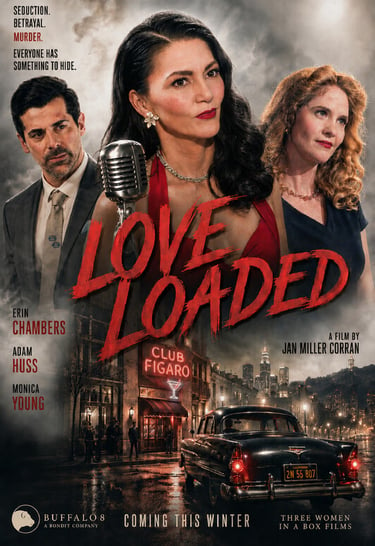
CPIFF 2026 Short Film Review “Love Loaded” Classic noir styling pays homage to its roots with criminality, personal chaos, and a nicely done “who-done-it” core
Author OneFilmFan
First, the Recap:
You’ve heard it asked a million times over….”What would you do for love?” Perhaps even, “What WOULDN’T you do for love?” An age-old query that has an equal number of possible answers….not all of them good! We find every feasible way to justify or rationalize our actions when it comes to pursuing the someone we adore, willing to take on almost anything to ensure the bond lives on. Ideally, these actions are well within the boundary lines. Though sometimes, there isn’t really any apparent boundaries present.
Take, for example, spouses Jack (Adam Huss) and Didi (Monica Young), whose current state of affairs (and believe me, PUN INTENDED!) is less than perfect. Co-owners of a small L.A. club/bar in 1958, Jack’s chosen profession has landed him in hot water, among other dalliances, much to the disconcert of his torch singer wife. When events unfold that shake their world up even more, the pair find themselves in a most precarious position, where everyone is a suspect and revealing the truth seems to be the most elusive target than ever before.
Next, my Mind:
I feel that what many would term the “hard boiled” crime dramas that flourished during the 1920’s Prohibition era eventually morphed into the noir-driven pieces found in the 40’s and 50’s, filled with the standard elements like antiheroes, the black and white or shadowy lit visual palettes, and moral ambiguity. It is assuredly within the latter realm that this 98-minute indie feature film, arriving from writer/director/producer Jan Miller Corran, producer Monica Young, plus executive producers Den Morlin, Matthew Helderman, and Luke Taylor, finds its footing, and does so with a nicely uncomplicated, character and story-driven effort that makes it a straightforward, entertaining romp while eliciting a sense of nostalgia for those bygone, wholly classic cinematic forays it gets its inspiration from.
It feels as well like there’s more of these ventures into yesteryear’s genres happening lately within the independent film community, perhaps not surprisingly given the artists who define this particular niche of the industry are never shy about just, well, doing what they wish to do rather than being controlled by the wants and mandates of money-only major studio operations. Here, the narrative that sees a couple already facing their own storms having to then deal with the rash actions of one them did that causes revelations and confrontations aplenty while framing it within a “who done it” shell, the film’s pacing allows for this all to come about with solidly executed purpose that maintains your attention well. And the large cast of characters who are a part of the proceedings likewise allow for mischief and personal mayhem, even as they all attempt to ascertain precisely what has happened as the tale progresses.
While the set pieces themselves are kept relatively simple, make no mistake that the club scenes especially totally capture the foundational essence of the time period we are immersed within. While other moments feel that it’s more clear we are looking at a slightly smaller budget project, it doesn’t take away from the pleasure of watching the film, and really it helps us focus more ON the characters and narrative instead of having anything visually that would be more distracting and/or unnecessary. The music involved does very much assist in selling us on the 50’s era, providing that “cool” vibe that so befits noir-based film. Additionally, the underlying concept that, quite frankly, no one in the story is truly “clean” only adds to the ambiance being created, but also paints a decidedly blunt picture that everybody has their demons and penchant for making poor decisions. It’s how you then choose to come back from these choices that gets displayed.
Thematically, there, as is almost always the case with indies, a wealth of ideas being addressed, like being haunted by our mistakes, secrets both hidden and unveiled, grudges and revenge-minded intentions, affairs, cover-ups, deceptions both calculated and, maybe, unintended, the specter of prejudices against certain orientations, being victims of circumstances, accusations and blame, airing our dirty laundry, discovering who we really are within, a desire of new beginnings, getting supposed “justice” on our own terms, rivalries, lust, and obviously love all get time on screen. The finale, which this critic thought paid homage to a more “Clue”-style format, is satisfying and I felt unexpected, since the narrative does a good job and directing you this way and that without making it as obvious as you might think as to who the final culprit could be. Yes, there’s still SOME predictability to be found here, but again, not enough to warrant any dissatisfaction for me.
Ensemble casts are the name of the game here, and as I have often pointed out in other reviews, it’s all about how the group interacts and meshes together that, at least for me, dictates the quality of both the group as a whole as well as individual contributions. Thankfully, we have a wonderful group to laud here. Young, who does her own torch singing here (and NAILS it!), exudes the kind of energy and persona encompassing a tough-with-a-heart attitude that fully accentuates her inner and outer qualities via the role as Didi. A woman caught in a ever-increasing web of her husband’s (and her OWN) yearnings and choices, Didi soon finds herself in a battle to be who she truly wishes to be while being embroiled in the chaos caused by her doctor husband’s bad decisions. Ultimately fighting to protect and see the truth come forth, how things will end up for her is an integral facet of the story, acting with conspicuous poise and grace throughout.
Huss plays up and displays the demeanor of a man in desperate, dire straits who’s both someone you could sympathize with yet also could justifiably believe is nothing but a cad through his role as Jack, a local L.A. club/bar owner in the midst of facing the music (in more ways than one) when a fatal choice he made in his work has put him in the crosshairs of more than a few people. Wrapped up in trying to cope with the pressure, but doing so via elicit means that are now threatening his marriage, will he be able to survive long enough to possibly make a GOOD decision? Or will it all come crashing down on him instead? This forms the other primary gist to the narrative, and Huss adeptly pulls off Jack’s authentic look of the time, but also the dynamics of someone strained beyond his ability to think rationally about how to fix it all, at least at first. The manner in which he acts makes you “feel” that sense of noir the film strives for, an engaging performance.
Erin Chambers comes around as April, a figure from Didi’s past who carries more than just a torch for singing, and who could have more than enough motivation to want certain other people out of her way when she blows back into town after many years away. It really is a “femme fatale” bearing that Chambers brings to the character, which serves beautifully in making us as the viewer wary of the character’s nature and intentions. Rich Ceraulo Ko is Bill, the bartender at Didi and Jack’s club who is also Jack’s best friend who would do anything to ideally see him exonerated and back to his usual self and showcases this commitment to the couple. I loved Ko’s “everyman” approach to Bill’s character, truly making him the precise type of bartender you’d want as your friend. It is this initial foursome of actors that establish the cornerstone world the narrative inhabits, and they all work together excellently as a unit to bring this about.
Thomas Hobson and Max Adler are Detectives Paul McBride and Lance Green respectively, the two no-nonsense L.A. investigators that look into the events surrounding Didi and Jack, pulling no punches yet remaining inside the lines to ensure that REAL, law-abiding justice is done and those responsible for the chaos are exposed. Even if not QUITE to the degree of a Mike Hammer, both actors entertainingly portray a still-present hard boiled manner that fits their characters to a “T”. Primary supporting players enter first via Constance Brenneman as Kelly, the bar waitress who has just a little more than some involvement with one of our main characters and who tries then to maintain an innocence about it. Chase Bennett and Emily Goss are couple Gary and Molly, the latter of whom works at Jack’s hospital and who also has a history with someone that has bought her nothing in the end but regret towards Gary and resentment from a certain other woman.
Adam Bucci is Alex, an employee of a local crime boss who proclaims to be nothing more than a “pasta maker” (yeah, right!). Bruce Clifford is Sean, a grieving husband whose loss plays a major factor in what we are witnessing come to pass with Jack. Tim Heurlin is Dr. Richard Lawrence, yet someone else who is holding a very strong (and creepy) torch for a certain someone. Tom Katsis is Marco Ponzetti, the aforementioned crime boss who, like so many similar to him, is not someone you wish to mess with and who can more than hold a grudge that demands satisfaction. Bryan A. Mackenzie is the Mystery Man because, well, his character IS a mystery unto itself. Scott Thomas Reynolds is Skip, the club/bar’s piano player and a complete picture of verity who tries to do what he can to aid in finding out what’s going on with Jack. Carly Zelner is Celia, Marco’s granddaughter and Sean’s daughter whom quietly wants revenge for her mother’s passing.
To the rest of the cast, I do extend absolute acknowledgment and congratulations for your parts to play in the film, as I am a firm believer that EVERYONE’S contributions are and should be deemed worthy and important. So, in total, “Love Loaded” delivers a thoroughly packed bundle of indie film-fueled spectacle, a worthwhile and well-executed ode to its influences, and just that kind of film you can sit back, take in, and accept for what it is.
STAR RATING (4 out of 5)
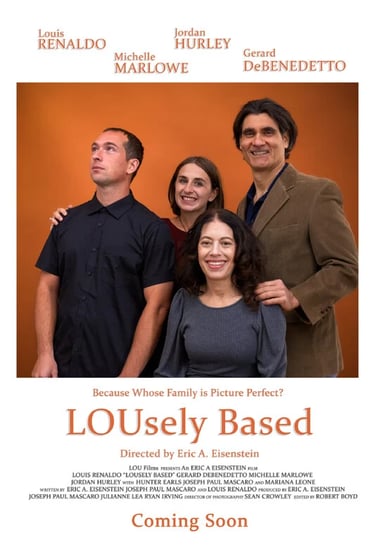
CPIFF 2026 Short Film Review “LOUsely Based” The weight of expectation, chasing dreams, and proving what can be earned in spite of disability shines forth impactfully and brightly
Author OneFilmFan
First, the Recap:
Interpretation. Evaluation. To fully understand what we as people choose to take in, or that is otherwise placed upon us due to any number of circumstances, is to learn to know ourselves. We are individuals. We have our OWN mind, our OWN means to make the decisions that impact our daily existence. And yet, why is it so often that OTHERS try to dictate where we go, what we do, and who we should become? Ideally not out of being domineering or unsupportive, but still perhaps out of more selfish intent, also whether meant or not.
Lou (Louis Renaldo) is a young man battling for his future and what he desires. Having faced the specter of being on the autism spectrum since birth, his awareness of the world around him is both keen and yet at times troubled. Still able to function with intelligent cognizance and a knack for writing, pressure from his father Lou, Sr. (Gerard DeBenedetto) to be a part of the family business doesn’t fully sit well with Lou, who forges a new path that just might surprise everyone….and silence the doubters.
Next, my Mind:
The radical variation in viewpoint, precisely how things are seen and absorbed, the stigmas associated with disabilities, the weight of unwanted expectations, and the wherewithal to conquer what others perceive as weakness or wasted effort all stands firmly present through this 14-minute short film from writer/director/producer Eric Eisenstein, writer Louis Renaldo, writer/producer Joseph Paul Mascaro, plus producers Ryan J. Irving and Julianne Lea. As this critic has pretty much run out of ways to word it any differently, what first makes a mark on you here is the awareness-raising aspect to the story, shining another truthful, candid, persuasive, and engaging light on the realms of autism, it’s effects, and the manner in which those affected by it are not only able to cope, have dreams, and showcase amazing skills, but are in need to be treated like any one of us….as HUMAN BEINGS.
Based on the actual life of Louis Renaldo, inspired by a personal story he created, the narrative sees a boy from birth through to young adulthood trying all he can to illustrate just how adept his mindset and skillsets are in SPITE of his autism and how it makes him see the arena of his routines in a totally unique fashion that transcends others’ opinions and judgements of him…even from his own family. This is the style of story and film I always deem necessary, as the ever-present prejudices against those with handicaps of any sort sadly remains, and it is something that needs to CHANGE so that we don’t lose sight of what it is to simply BE human towards one another, as mentioned above. It’s a complete win for this narrative to depict an entire core premise of being outcast, misunderstood, and underestimated while then triumphantly soaring into the realms of overcoming those odds and proving to the naysayers that accomplishment knows no bounds.
The explorations of the challenges brought to others’ lives when having to raise and have patience with an autistic child is not avoided here at all, and that is just blunt truth being shown. BUT, again, it is about the means to see BEYOND that internal and external struggles to recognize the creative outlets those within the spectrum either get introduced to or discover themselves that turn into the revelations of what they are capable of achieving. The additional thematic forays into this concept along with realities of feeling ostracized, isolated, and striving to express oneself in evident and constructive approaches to gain the attention of those who continue to doubt are all imperative to the narrative as well, and it leads to the finale that TRULY emphasizes just how victorious someone with autism can be, especially when having found those around them who GENUINELY care for, encourage, support, and foster such attitudes to manifest within them.
There’s an undeniable boldness, a fearlessness, that this critic feels Renaldo stridently represents and engenders in us a the viewer through his role here as Lou, seen from 3-years old, 12-years old, and then through Renaldo as the young man who is constantly reflecting on all around him with an elevated sense of actuality, even as so many around him dismiss him for his disability. Trying to keep pressing forward and into the primary outlet to express himself he finds most personally fulfilling, it is still an uphill battle to go beyond what his father keeps trying to push him into while his mother, sister, and a select few others choose to see what he’s able to do and do their best to send him in that direction. Renaldo is so beautifully believable here, which honestly only makes sense given it IS his own life, hence himself, he’s playing. But that doesn’t take away from the foundational wonder of how he engages you with a performance both understated and inspiring.
Michelle Marlowe is the consistent voice of understanding, advocacy, and even to an extent a “shield” of comfort for Lou as Gina, Lou’s mother. Her belief and instinct to KNOW what her autistic son can do, how precious he is in his exclusively different view of the world, and that he CAN rise above it is present and accounted for, with Marlowe embodying that strength of motherhood energetically and credibly. Debenedetto has a more emotively forceful presence that befits the character he portrays, Lou, Sr., Lou’s father whose successful business is what he wishes his son to be a part of, carrying a degree of resentment and frustration towards him when Lou resists this path. What I appreciated is that Lou, Sr. wasn’t made out to be some uncaring monster, or even overtly overbearing, but rather a man wanting the best for his child, but yet also not fully realizing what it is that his son can do or wants to attain. DeBenedetto nails this demeanor with excellence.
Primary supporting turns arrive first from Jordan Hurley as Angela, Lou’s sister who is far more arriving from the viewpoint of Lou’s condition and aspirations that her mother is. From childhood through to her brother’s adulthood, she provides him unconditional love and staunch support in the face of those around them who have skepticism about his ability to function or reach success outside their own limited comprehension of his condition. Joseph Paul Mascaro is E. Laine, a local acting coach/teacher for the class Lou chooses to take in order to pursue the endeavors that mean something to him. But, will Laine be able to see beyond the supposed obstacles and lack of what he feels is skills Lou possesses and instead find out the exact opposite? It’s one of those characters you’re at first loving to hate due to his dismissive manner towards Lou, but there’s also some redemption to follow, and Mascaro takes this character on with poise and precision.
Mariana Leone is Sadie, one of Lou’s acting classmates and someone whom he may have an infatuation with or at least gravitates towards due to her actually acknowledging and affirming him. She also becomes a key catalyst later in the film for a pivotal instance that will define the story’s ending, and I just appreciate Leone’s relatability, charm, and resolute style that sells you on Sadie’s character. Additional supporting appearances are made by Cole Finnegan, Jackson Finnegan, Hunter Earls, Adeline Sawyer, Judah Sawyer, Gabrielle Cody, Aria Swan, Jordyn Jacobson, and Gaius Garro. So, in total, “LOUsely Based” is a fundamental exhibition of subduing unwanted expectations, cultivating the drive to live life on your own terms, ascending above disability, grasping onto those who are authentically there for us, and ultimately prevailing in our dreams. Folks, these are life lessons to learn and apply. May we ALL be open to seeing it in ourselves AND others.
STAR RATING (4.5 out of 5)
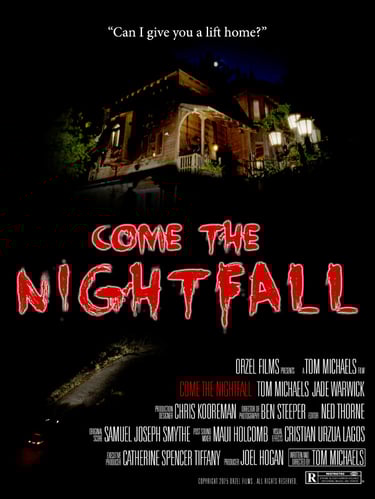
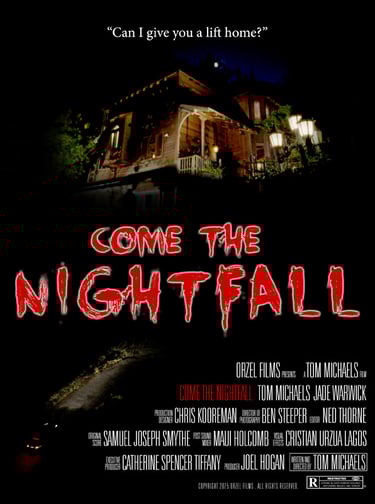
CPIFF 2026 Short Film Review “Come The Nightfall” It’s a trip back to the 80’s style of slasher film that defines the horror genre to this day
Author OneFilmFan
First, the Recap:
First impressions and hidden proclivities. Sounds like an odd pairing, right?? What we see on the surface can be more than deceiving when seeming innocence masks evil. If we might encounter someone that has such a demeanor, how quickly will we make a decision that, one way or the other, could spell gratification….or our doom? AND, what if said person whom this all applied to might be more…familiar…to us than we ever imagined?
In a small town, life is being upended by some rather heinous crimes that has everyone on edge. Enter Bill (Tom Michaels), a man whose generally affable nature would not cause anyone to believe he is anything other than what he appears. On his way home, he spots “damsel in distress” Joanna (Jade Warwick), offering to help her out. With a veiled yet evident licentiousness about him and hesitant but wryly aware manner about her, Bill and Joanna’s evening is about to get….interesting!!
Next, my Mind:
As I continue to have some more recent encounters with the horror genre that are outside my personal preferences, I cannot deny there’s a strange fascination with them which manifests. Films that embody the traditional “slasher” style corner of this massive genre tend to turn me off, only as overt amounts of blood and gore just don’t agree with me. However, when there’s perhaps a little cleverness, some purposeful (or at least potential) misdirection involved, things can elevate a bit and at least add some entertainment value. So, now referring to this 23-minute short film from writer/director/executive producer Tom Michaels, producer Joel Hogan, executive producer Catherine Spencer Tiffany, plus associate producer Isaac Rowe, I have to admit…color me surprised and unexpectedly entertained.
The narrative sees a town suddenly besieged by an abrupt increase in dastardly incidents that sends a salacious local man into an encounter with a woman in need that may or may not precisely go the way he’d planned. It’s a simple enough approach, nothing in itself overly original, and this is what began to concern me….at first. BUT, as the story progresses at speed, things began to take shape that at least caused this critic to ponder what EXACTLY the ultimate outcome was going to be. Top this off with a primary twist that does lend itself well to the fashion of horror the film represents, and you are hence ushered into a genre piece that provides everything one would anticipate, while also perhaps transporting us back to the 80’s methodology for its core execution, visual dynamic, and even music score stylings that certainly creates that decade’s ambiance.
It is a little more difficult in itself here to necessarily delve into “deeper” thematic elements that go beyond the surface, only in that, frankly, there aren’t really many to do so. This is not remotely a knock on the film, as sometimes, things just are what they are. We could certainly at minimum ascertain that it isn’t good to go home with strangers, nor is it ever good to automatically assume that you “know” someone, or could just “figure them out” hastily and believe things are just going to go well! Of course, the horror genre THRIVES on such conspicuous naiveté, especially the “slasher” realms. The facets of just HOW creepy someone who is unhinged can be does stick out here with high effectiveness. Think of it as the standard cautionary tale of what NOT to do when in real life while sitting back and relishing the pure, foolish ignorance of people in situations as depicted, being thankful YOU are NOT that kind of person!
In, I feel at least, true indie film M.O., the director of this effort steps away from behind the camera lens to be in front of it, here in the form of Michaels and his role as Bill, a small town man of means who just SEEMS “off” from the first time you see him, becoming more emphatically pronounced as events transpire. When on a particular evening he comes upon a woman in need of assistance, using his innate charm and somewhat “everyman” appearance to offer assistance that she accepts, things take a turn as their now shared night ensues what will assuredly define WHO each of them is…and what it all reveals! I absolutely appreciated Michaels’ performance here, as he very much oozes the magnitude of creepiness that is necessary for Bill’s character to showcase, unsettling AND entertaining as well!
Warwick is likewise a shining example of what we initially might interpret as the prototypical “helpless female” in a film like this, but instead offers some nicely delicious depth and more acute awareness of what her situation could ACTUALLY be through her role as Joanna. IN a more “standard” circumstance involving her car being broken down on a lonely nighttime road, her encounter with Bill holds the expected hesitations about who he is and whether she can trust him. Choosing to do the latter, it doesn’t take long for her to realize he may not be the “good samaritan” he tries to come across as, yet she herself ALSO might not be what SHE appears either, levels of what seems like gullibility not quite accurate. How it unfolds is what gives this film some legitimate, if still uncomplicated, tension, and Warwick brings both a femme fatale AND scream queen vibe to bear perfectly.
Supporting turns are made here first by Vanessa Beck as a woman who is really THE catalyst for everything we see occur in the film, and she does make an impression right from the start that allows what happens to adeptly linger with you. Mitch Taylor arrives as the owner/operator of a local convenience store who Bill engages with and who more than has his opinions about what the events occurring mean to him. So, in total, “Come The Nightfall” definitely stands as an ode to and current testament of the horror film world’s foundational style, tropes worn with secure confidence on its bloody sleeves, while providing solid entertainment that should please fans of this design and course. Again, it is what it is, doesn’t try to BE anything else, and THAT is something I can certainly applaud for filmmakers for sticking with when it comes to the efforts they produce.
STAR RATING (3.5 OUT OF 5)
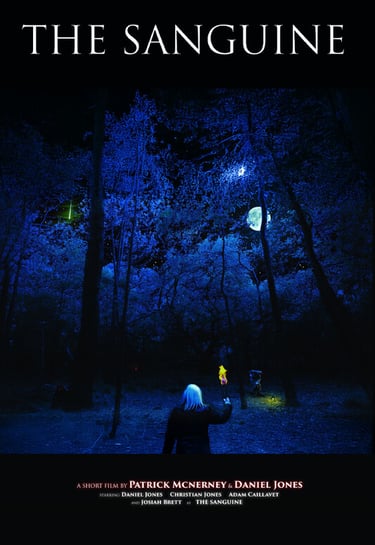
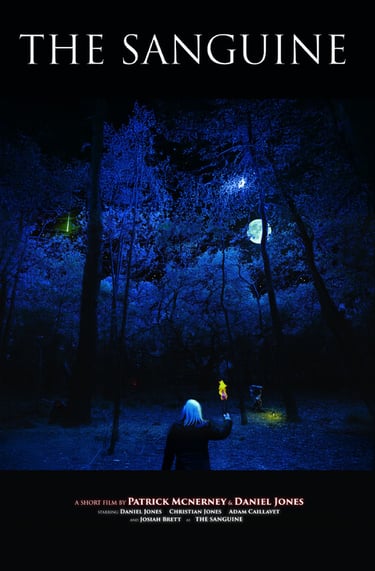
CPIFF 2026 Short Film Review “The Sanguine” Avarice, ill-fated choices, treachery, reprisal, and newly woken evil reign in this fantasy/horror/thriller mash-up
Author OneFilmFan
First, the Recap:
What IS the cost of seeking something so overtly devastating to others….retribution. Once we feel, or otherwise haven proven, that we’ve been so deeply wronged, the innate surface desire to initiate payback is there without hesitation. Taking the time to believe we’ve figured out the most effectively efficient ways in which to exact our sense of “justice”, we even rope others into it as well, regardless of the consequences THEY may end up taking for the sake of our “mission”. The question might then become….WILL this actually resolve our issues….or amplify them?
In a far off kingdom, The Elder (Daniel Jones) is a disconsolate man on such a quest. Forcing the service of a banished servant named Paul (Christian Jones), now an unwilling accomplice to the actions and machinations that have been developed, The Elder’s backstory is divulged. Very quickly, it becomes more than clear that The Elder’s intentions and means to accomplish them involves not only a deceased warlord’s sword, but something even darker that is also being resurrected and unleashed.
Next, my Mind:
The fantasy genre, in any of its forms, is a highly popular genre within the cinematic realms, fostering MANY a film and TV show alike which transport us into the fantastical, dramatic, otherworldly arena of eldritch creatures, high court politics, et al. In my personal forays through the indie film ranks over the last twelve years now, I must say that the number of films I have had the opportunity to watch and review within said genre has actually been few and far between. Hence, when it came to this 25-minute short film project from director/producer/cinematographer/editor Patrick McNerney and writer/director/producer/cinematographer/editor/composer Daniel Jones, I was honestly excited to see it was a fantasy/horror /thriller effort. And disappointed I was not, but rather distinctly impressed by what transpired before my viewing eyes.
Through what I felt was ultimately a “Game of Thrones” style approach, the narrative follows the unfolding of a straightforward but still engaging scenario where a disgraced and disenchanted Elder conspicuously reveals to his reticent “partner” that sole focus in life has become to retrieve a specific sword once wielded by a powerful warlord and usher forth a revenge plot against those whom have lead the kingdom into ruin, past, present, and hopefully-to-be-prevented future. While the righting of injustices and putting down those who are evil seems like a noble endeavor, the beauty and unsettlingly haunting nature of this tale is more found in a concept of someone attempting to utilize equally dark tactics to bring it all about, not TRULY considering the actual price that might end up being paid in seeing it through, much less when also realizing the ominous force that is brought back to life to achieve it here that may or may NOT be in his control overall.
The general atmosphere of tension and building unease is what reminded me of the, granted, more politically-driven narrative direction, mood, and tone that “GoT” offered over its run, and it serves this film well, too. Even as the wonderfully executed revelations and flashback-lead telling of the events that formed the present we are seeing come to pass, the visually adept, solidly orchestrated instances that further create the supernatural and fantastical elements of the film are likewise carried forward with excellence, very much adding weight and relevance to the story’s course. Plus, truthfully, the imagery is just plain COOL to watch and is yet another testament to indie filmmakers using what they have to work with to maximum impact, here relying on BOTH special effects AND practical effects to transform the world we witness into the magical then horrific place it is in order to suit the tale.
When it boils down to it thematically, this is a foundational study of human greed, hunger for power, selfish ambitions, betrayal, and the conclusive damage, discord, and doom it causes. Even WHEN those who might get their just rewards encounter that comeuppance (seen or via conjecture), WILL it be the END of revenge….or just the start of uncontrollable chaos to come? The manner in which the film’s finale is delivered was brilliant, and it does make one wonder if perhaps either another installment OR perhaps a feature film version of this story might be on the horizon? This critic is hoping so! Daniel Jones steps away from all the aforementioned duties listed earlier and takes on one of the lead roles here as The Elder, a man of means who’s found himself on a stormy and angrily resolute journey of retaliation when one family whom he thought he knew and trusted turned their backs on the kingdom he loves and has served faithfully.
Choosing to go a route that sees a malevolent set of forces as the catalysts for this decisions, will what comes about from it all really be to his advantage? Or will it turn into the downfall of more than just those he’s aiming to see displaced….and dead? The ramifications of his actions are both evident and extrapolated, and the way in which Jones plays the character is very apropos for the role, eliciting at first (perhaps) SOME semblance of empathy towards his character’s frame of mind and circumstances until it is blatantly clear his motives are truly skewed to dire extents. Jones oozes this attitude of quiet and pronounced menace throughout the performance that sells you on his character with concrete validity. Christian Jones arrives next through his turn as Paul, a cast aside and poor servant who gets caught up in The Elder’s schemes on a not-so-voluntary basis.
Not completely realizing precisely what The Elder is up to, Paul listens with purpose to the story of The Elder’s plight until it could become too late to escape the actuality of what has been set loose, much less having to accept newly unearthed discoveries that might spell severe trouble with this already tense association. I applaud how Jones plays Paul, a hapless pawn in an evil game that we know he really doesn’t wish to be a part of yet is given no choice in the matter. There’s a grounded and believable air that Jones infuses the role with, most assuredly evoking an urgent degree of sympathy for him, even when the outcome of events, again, could be disastrous. Josiah Brett exudes the kind of energetic intensity necessary to portray his character (and the film’s namesake) The Sanguine, a warlord of fierce reputation and proven battlefield brutality who, upon finding an extraordinary item that wiped out armies, forges a unique sword that makes him all but invincible.
Yet, as his conquests grow, the kingdom’s leadership begin to question if he’s gone TOO far, soon under scrutiny and the now wary eyes of those who wish to sew seeds of discontent. Falling prey to these worries, The Sanguine suddenly has a (horrifying) chance at diabolically renewed life…but once more as an instrument to be exploited. CAN he be controlled? Or will what has returned end up an even more unimaginable specter of destruction than he already had been in life? Brett goes all in here, illustrating the sheer ferocity and single-mindedness of an entity now bearing his own magnitude of rage and thirst to make anyone who gets in his way pay. Frankly, I feel like this is the kind of role an actor might relish, and I felt Brett displays that through the vigor of his performance, a picture of tragic and infernal conditions the character represents.
Primary supporting turns arrive from Adam Caillavet, Sharon McNerney, Dylan Silhavy, and Brandi Jones, whose roles I am purposefully not getting specific about more to not necessarily give away certain points about their characters and the imperative relationship to the story they have. But, I will certainly state that each one did a perfectly solid job in their respective parts. Additional supporting turns arrive from Nicholas Jones, Levi Brett, Vong Hem, Mercedes Elshick, Jordan Poeppel, Lauren McNerney, Kelley Inman, and Amanda Sweeten PLUS Christian Jones, Jon Sweeten, Robert Clough, Ryan Hintz, Levi Johnson, and Michael Steele, all of whom played multiple roles over the course of the film! Congratulations to this ensemble cast on putting in the work needed to make a film happen!
So, in total, “The Sanguine” stands firmly on its own two fantasy/horror/thriller feet then soars on equally powerful wings, proving to be what could also be contemplated and assessed as a proof of concept for a larger feature film or short film sequel. Time will tell with that. But, in the meantime, this is one of the better indie films of its genre I have seen, thanks to smartly employed visuals (SFX and practical) combined with a narrative worthy of a smaller scale “Game of Thrones”, adding in the eerie and unnerving aspects’ punch that makes everything meld together with evident creativity and ardent intent, the very heartbeat of indie cinema, leaving us wanting more.
STAR RATING (4 OUT OF 5)
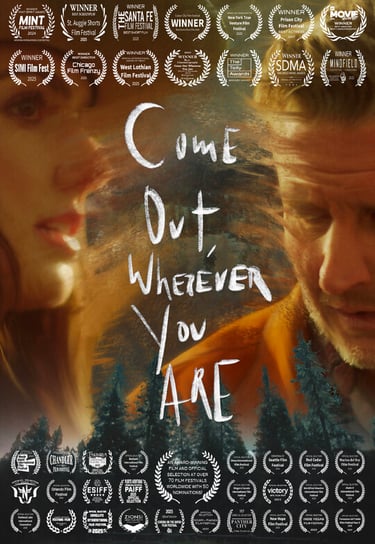
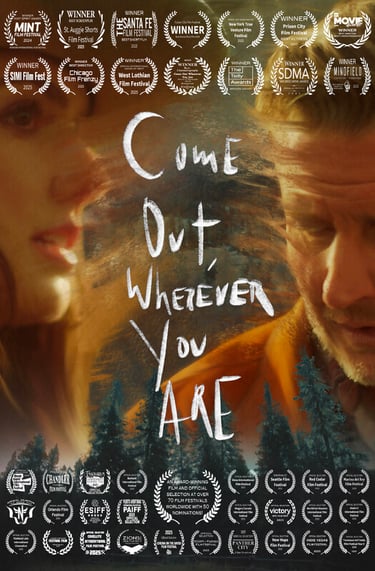
CPIFF 2025 Short Film Review “Come Out, Wherever You Are” Stealing away from our mistakes and social media’s influence get a conjecture-filled exploration
Author OneFilmFan
First, the Recap:
To disentangle from the world at large. Doesn’t that sound amazing in so many respects? When the chaos within either our own lives or the greater reality we find ourselves buried by, do we not wish to just abscond from it all? Disappear? Disassociate? Ideally, this would be to find peace inwardly and outwardly, at least for a time, so that we might gather our thoughts, consider what steps we take next, and then come back refreshed. However, what would then happen if, upon our return, everything we had known suddenly…..wasn’t?
In a small town called Livingston, Montana, former (and disgraced) politician Verne (Blake de Pastino) desires to do precisely what is needed when news of his past transgressions surface in the news, spreading like wildfire thanks to social media….ESCAPE. Gathering what he needs and heading to a remote cabin in the woodlands outside of town to seek the solace required, Verne has his time of reflection. But, when returning to town, things are NOT all well, and only a young woman named Marion (Marilyn Bass) seems to have answers that they’re BOTH soon wrestling with.
Next, my Mind:
Retreating from our mistakes, confronting our true feelings about them, wishing to be free of it all, and the actualities of a culture being so globally interconnected that said flight from the public eye seems impossible are all elements that make up the core of this 29-minute short film from director/executive producer Caitlin Presberg, writer/producer Dan Burns, along with executive producers Lorraine Diaz, Judy Nygard, Eric Nygard, and Susan Presberg. With the utilization of revealing only hinted-at factors paired with a relatively high amount of enigmatic yet engaging conjecture, the drama/scifi film is certainly the definition of what indie cinema is so adept at, relying on character and story while still managing to find the means to make the approach to a given subject fresh and interesting. Honestly, I felt this effort came across more as of a proof of concept piece in many respects, and perhaps that was intentional or a harbinger of future things to come?
Told primarily from the perspective of one man’s attempts to outrun the suddenly revisited, yet not completely (if at all, really) disclosed, sins of his past as a politician serving one of Chicago’s suburbs and his now subsequent actions to try and get out of public scrutiny in the small Montana town in which he now resides, there’s an initial, necessary, palpable air of tension built up during the film’s first scenes that act as catalysts for everything that follows. The tone takes a slight break once events move to the point where our lead character is doing what he can to decompress and truly process whatever it is that he’s done, lost, and had to leave behind, all while simply wanting a peaceful, albeit isolated life. And it is THIS particular facet of the film where the aforementioned conjecture starts to come into play, as paying attention to little details, whether visually or spoken, becomes imperative to delve into the underlying layers of the narrative.
As we are all more than familiar with, the world is now digitally united (of course for both good AND ill) thanks to cell phones, laptops, and all other devices that permit us to KNOW what is happening virtually everywhere, at any time, and it FEELS like, with anyone. This applicability to those IN the public eye…ie: celebrities, politicians, et al…when things go WRONG for them makes this reality of exposure even more evident and pronounced, and it is this central fact that also ends up forming a major part of this film’s gist. But again, the magic of it is that it ISN’T blatantly conspicuous, requiring that we as the viewer truly stay tuned in to what we are watching and therefore putting pieces together AS we go. While this may be what we do with any film, I felt it is more significant to be doing so here, as even when we become aware of what SEEMS to have occurred, there’s more to it than JUST the surface.
Hence the very notion of how Verne is trying to get away from his indiscretions takes on whole new meaning when the events ,which we never actually see happen directly (though, again, there IS at least a HINT at something being amiss in a certain form), could be construed as both a blessing and a curse for him. By the finale, we are left with at least a small degree of newly acquired comprehension of what has become of the world, yet still not fully enough to be TOTALLY satisfied, and that is also what this critic feels was a beautiful stroke and intelligent writing, given we almost always WANT definitive closure, but here aren’t granted it. It’s a nice touch, intelligently written, and lends the concept of a feature film or at least another short film follow up potentially, should that be something Presberg & Co. wish or desire to provide. Regardless, it’s the statement about our technologically reliant lives that cleverly takes center stage in multiple ways.
Blake de Pastino lends that “everyman” aura which absolutely befits the character he portrays here through the role of Verne, a former Chicago-based politician who had an apparent fall from the top that we believe lost him more than just his career. Now residing in a small, out of the way Montana town, his solace gets unceremoniously interrupted when news of his errant decisions has resurfaced, made worse by the fact social media’s reach is so wide and effectively unavoidable. Looking to once more flee from the unnerving nature of this unwanted attention, Verne gathers things and heads out to his remote cabin to compose himself and face his demons. But, once this venture has run its course, his return to the town ends up being anything but normal, with only one interaction with another human being that provides any sense of what happened while he was away.
Given his circumstances, will this revelation actually be what he will highly benefit from? Or will it also be the start of a new type of victimization for him to confront? It’s a nicely delivered performance that de Pastino gives, down-to-earth, relatable, and making the character one we might both root for AND against, depending on how things turn out. Primary supporting roles come first from Bass as Marion, a young woman Verne runs into on the road going out of the now-vacant town who has her own tale to tell of what precisely has unfolded since Verne has had no means to be aware of the outside world while at his cabin. The air of mistrust is evident for Bass, who is reluctant at first to share or truly interact with Verne until he convinces her he can be trusted. I love the enigmatic mood that Bass elicits through Marion’s character, only advising certain details without feeling like EVERYTHING was divulged.
It makes Marion someone we WANT to trust, yet aren’t one hundred percent sure about, as sometimes innocence can just be a veil for something else lying underneath. It’s a perfect performance to create that sense of quiet unease and questionable certainty about Marion, which Bass plays up adeptly well and with total credibility. Amber Rose Mason is Marge, the owner of a local cafe in the town of Livingston whose known Verne as a regular for a while, but who then becomes the bearer of bad news on the particular morning visit to her establishment Verne always does. Douglas ‘Hurricane’ Hall is Pete, the owner of the town’s gas station/convenience store who is also quite familiar with Verne, even as he comes in to buy supplies for his time away, which concerns Pete to no end, even offering to check in, but Verne resists.
An additional supporting turn is made via voice only by Melanie McNulty. So, in total, “Come Out, Wherever You Are” is an interesting study in our current cultural climate when it comes to mistakes being aired out in such overtly far-reaching ways via social media, but then also how any encompassing interruption of that can spell both salvation and subjugation when it comes to our poor decisions having been disclosed for the world to judge. Is reliance on such wide-reaching technology spelling doom or release? THAT is what we must determine and wonder about….and therefore try and surmise what our next chapter might be like in its absence.
STAR RATING (4 OUT OF 5)
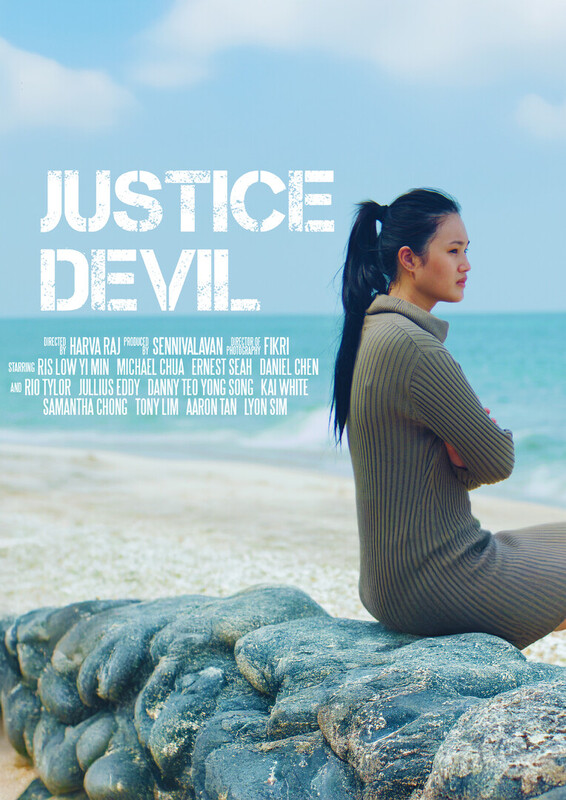
CPIFF 2025 Indie Film Review “Justice Devil” A tale of tragic loss, bitter revenge, and the weight of conscious
Author OneFilmFan
NO TRAILER CURRENTLY AVAILABLE
First, the Recap:
What really are the burdens of our choices? Do we take from granted that the places that life takes us will always be to our benefit? Or, do we sometimes find that choosing a certain path out of innocent intent can end up exposing us to elements we’d much rather have avoided? Indeed, if the latter becomes the case, are we willing to maintain holding on to what we first desired in it, even at the cost of our own basic ease, or face the more dire results of trusting in that which is inherently evil?
A young woman named Ellen (Ris Low Yi Min) had what she believed was a match made in Heaven in having met the enigmatic and charismatic Ben (Kai White). But, what she hadn’t counted on was his association with an unscrupulous and violent gang lead by Andrew Wong (Michael Chua) and his crew of Max (Ernest Seah), James (Daniel Chen), former best friend Goh (Rio Taylor), and newest recruit George (Jullius Eddy). Trying to escape them when things go south, a terrible price is paid by Ellen’s daughter Mikka, sending a grieving, angry mother on a path of harsh revenge.
Next, my Mind:
There is a highly distinctive styling and overall execution when it comes to the crime thrillers from Southeast Asia, very much setting them apart from so many of the Western world’s standard offerings in the genre. This critic freely and honestly admits not being overtly familiar with all the classic films of this area, nor claim to be ANY form of “expert” in this particular region’s filmmaking efforts. But, that is precisely why the opportunity to take in this new indie feature film project from Singapore-based writer/director/composer Harva Raj, producer Sennivalavan, and associate producer Bardroll Hisyam was so unique and filled with a fresh excitement to see what it’s all about. What we are given by this young, first-time filmmaker is a well-fashioned, raw, taut, unflinching journey into the black heart of the evil that exists in the world being confronted by, and dealt with, through the eyes of unbearable pain, crushing loss, simmering retribution, incontrovertible justice, and the foundational desire to stand against that which seeks to do nothing but push you down and manipulate you for its own gains…no matter the cost.
Suffice it to say, this isn’t some quiet, soothing walk in the park, folks. Through the narrative that sees the turbulent and devastating circumstances that force a young woman to take the path of vigilanteism to quell the hurt she’s endured on a multitude of levels, the film’s utilization of flashback and present day sequences adeptly helps to flesh out the entire tale, but do so in a manner which KEEPS you watching in order to truly find out ALL of what’s transpired and why. With a visual look that maintains a relatively uncomplicated aesthetic in order to focus on the story in play, what stands out here is the music score that truly acts AS a storyteller in itself, using the fluctuating rhythms and tones to amplify the settings and events that are occurring throughout the film. This also allows for the film to communicate its intent without constant dialogue, the notes “speaking” for the characters and what’s unfolding before us as the viewer. Don’t get me wrong, there IS still plenty OF spoken parts to fill us in, but it remains almost equal to the amount of music that is used to draw us along and hence FEEL the sea of volatile emotions that are conveyed.
Additionally, the sheer visceral impact of the violence here actually gets what I felt was an interesting treatment in that we don’t always directly see what happens in given moments, rather glimpses or quickly passing frames that make you comprehend it, but not necessarily have to WITNESS it in its fullness. I feel this works quite effectively, and again, there is plenty of indicators of what HAS come about when seeing the aftermath of it. I will only say that there ARE lighter moments in this effort, but will refrain from expanding on it for the sake of saying SEE THE FILM when it is available to do so. Thematically, the depth of love that is motherhood, the merciless nature of criminality, cycles of violence and the cost it engenders, conflicts of conscious when really facing actions you’ve taken that aren’t what you wished they had to be, the ugly “politics” of money, power, and fear in the scope of illegal endeavors, seeking faith to justify our decisions…or attempt to find absolution, and being a product of our surroundings all find their way into this narrative, and appropriately so.
What might be the most unsettling about all of this is the fact that when we look at our current world and the state of being that it’s in, there’s the hard reality that violence, self-serving attitudes, the use of anger and menace to achieve “goals”, and the disheartening consequences innocent people DO end up experiencing really makes for the societal statements the film does put forth all the more potent in their verity. But, OVERCOMING what tries to come against us, showcasing the willingness to NOT just “lay down and die” when things seem unrelenting and unconquerable ultimately becomes the primary gist, and the finale of the film assuredly makes this point more than adequately, unavoidably emphatically really! Ris Low Yi Min is a completely believable and affecting portrait of all-consuming grief, rage, and deadly determination through her role here as Ellen, a woman who’s more than driven to complete the mission of vengeance she’s on in the wake of unimaginable loss.
Encountering the weight of her own choices, some completely innocent in initial nature, as she pushes to get her own idea of reparations from those who took from her all that she loved, Ellen’s path will prove to be an exercise in what the real ramifications are for pursuing it all in the manner she is. She’s a character you, of course, more than can’t help but root for, empathy for her inward and outward strife unquestionably strong. Yi Min’s performance just oozes with energy and intentionality that befits the character of Ellen solidly. Chua arrives as crime boss Andrew Wong, the leader of the gang whose dissatisfaction with Ellen goes to extremes..and to their own detriment. Chua certainly plays the character well so as to elicit that “person we love to hate” mentality when watching him depict a vile man. Seah is likewise the epitome of intimidation and pure maliciousness through his performance as Max, Wong’s second hand and utterly corrupt soul whose penchant for violence might only be matched by his quest for more power and dominance. It’s again one of those characters you just revile, a total credit to Seah’s intensity and acting here.
Chen is James, the brains of the operation who still can more than hold his own should trouble come calling…unless perhaps it’s in the form of Ellen! Taylor is Goh, a now-former best friend of Ellen’s who may or may not have done his own damage to get her in trouble with the gang, inadvertently or not. Eddy is George, the gang’s youngest and newest member who makes the most fatal decision which leads to Ellen’s road to equally fatal retaliation. White appears as Ben, a man who will become both a blessing and a bane to Ellen’s actuality. Additional supporting turns arrive from Lerynn Eng as Mikka, Ellen’s daughter whose the real catalyst of the events, Danny Teo Yong Song as a local pastor Ellen knows who tries his best to make her think about faith in times of hurting, and Samantha Chong is Hellen, a friend of Ellen’s and Goh’s fiancé. Other appearances are made by Tony Lim, Aaron Tan, Lyon Sim.
So, in total, “Justice Devil” is a striking first effort, unwavering, uncompromising, unrelenting, and steadfast in its purpose to illustrate, at its core, good prevailing over evil, though not always without the sacrifice of spirit, mind, and soul, even when the motives in itself seem unequivocally merited. Plainly, when it does come down to it, violence is NEVER the true answer to any problem. Real justice is right, needed, and far too often not achieved. May we strive to always take a higher path and hope that those responsible for heinous acts will get what’s coming, but in ways that don’t cost US who we are.
STAR RATING (4 OUT OF 5)